Perspectives on Portuguese Animation
CINANIMA – International Animated Film Festival of Espinho
Perspectives on Portuguese Animation is an initiative of CINANIMA – International Animated Film Festival of Espinho, originally conceived and developed in 2021 by the then Artistic Director of CINANIMA, professor, researcher, and multi-award-winning animation director Pedro Serrazina.
Since then, CINANIMA has continued to organise new annual editions of the symposium, with the additional objective of producing scholarly publications as outputs of the initiative.
Following the first two editions — the first dedicated to filmmakers David Doutel and Vasco Sá, curated by Pedro Serrazina, and the second focusing on the female duo Alexandra Ramires and Laura Gonçalves, curated by Cátia Peres — two further volumes have now been published, corresponding to the 2023 and 2024 symposia.
In 2023, the 3rd edition of the symposium was held within the framework of the 47th CINANIMA Festival, and in 2024, during the 48th Festival, the 4th edition took place. The primary aim has been to further develop a multidisciplinary analysis of works by Portuguese animation filmmakers, based on the recognition that this remains a relatively underexplored field within scientific and academic research.
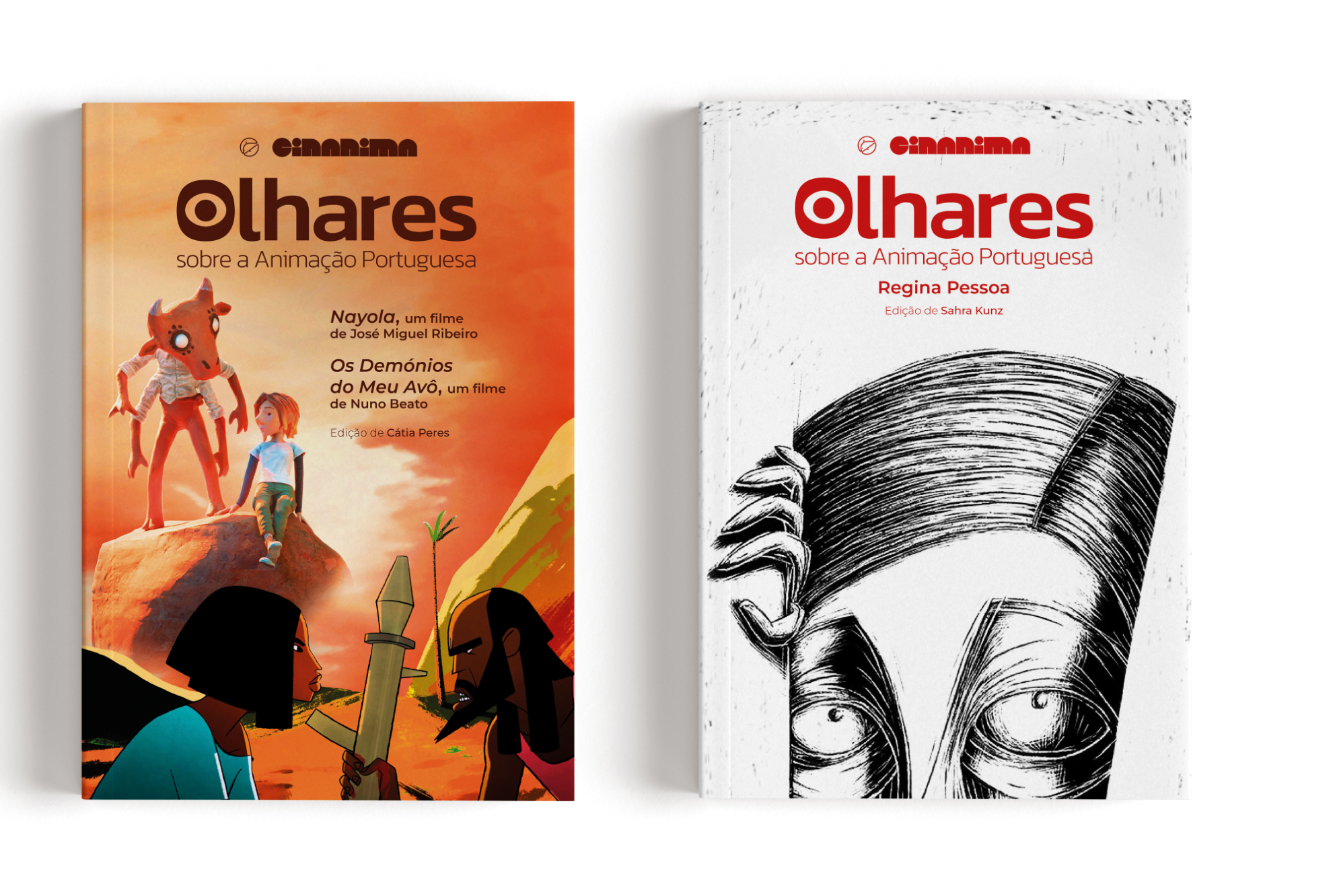
The 2023 volume, curated by Cátia Peres, focuses on the analysis of the feature films Nayola, by José Miguel Ribeiro, and Os Demónios do Meu Avô, by Nuno Beato. The contributing researchers include Cátia Peres, Cynthia Levitan, Sandra Ramos, João Apolinário, Inês Rebanda Coelho, and Risa Cohen.
The 2024 volume, curated by Sahra Kunz, features analytical contributions by Laura Castro, Patrícia Oliveira-Silva, and Pedro Serrazina on the work of Regina Pessoa.
Based on these two years of symposium activity, and with the support of the ICA – Portuguese Institute of Cinema and Audiovisual, two bilingual scholarly publications have been produced for academic communities in Portugal and abroad, available both in a limited print edition and in a freely accessible digital format via the CINANIMA website.
The presentation of the publications will take place from May 2026 onwards at festivals, conferences, higher education institutions, and other cultural and educational organisations, targeting the general public and featuring the participation of curators and editors, as well as authors and researchers.

Cristina Novo
Project Organiser · CINANIMA
Cristina Novo holds a degree in Sociology from the University of Porto and has over 20 years of experience developing social and cultural projects in Portugal. She has worked in documentary cinema and interactive digital art production, including Imago and projects with Mecha Studio. Since 2018, she has been part of CINANIMA – International Animated Film Festival of Espinho, where she coordinates educational, partnership, and critical-thinking initiatives as project manager in the education department.

Cátia Peres
Editor and author of the 3rd Edition
Cátia Peres holds a PhD in Animation, completed in 2019. Her research focused on methodologies for the creation of an analytical model for animated films, contributing to the framing of scientific research in the field of Animation. She is Director of the BA in Animated Image and of the MA in Animation at the School of Education and Communication of the University of Algarve, in consortium with ESMAD-IPPorto, and Coordinator of the Animation area at UAlg. She regularly participates in conferences, festivals, and specialised publications regarding research as a fundamental instrument for the consolidation of animation education and practice in Portugal.

Cynthia Levitan
Author of the 3rd Editions
Cynthia Levitan holds a PhD in Design from FBAUP – University of Porto, and is distinguished as a sculptor and director in the field of animated cinema. She recently completed the short film Pietra, produced by Sardinha em Lata with financial support from the Portuguese Institute of Cinema and Audiovisual (ICA), co-produced by Pangur Animation in Valencia with national and local public funding from Spain (ICAA), and by the Polish film studio CeTA – Centrum Technologii Audiowizualnych in Wrocław.